Custom Aluminum Enclosures: Machined, Sheet Metal or Extruded?
Machined, folded or extruded? How to choose the right route for a custom aluminum enclosure — walls, corners, seals, finishes and where each route pays.
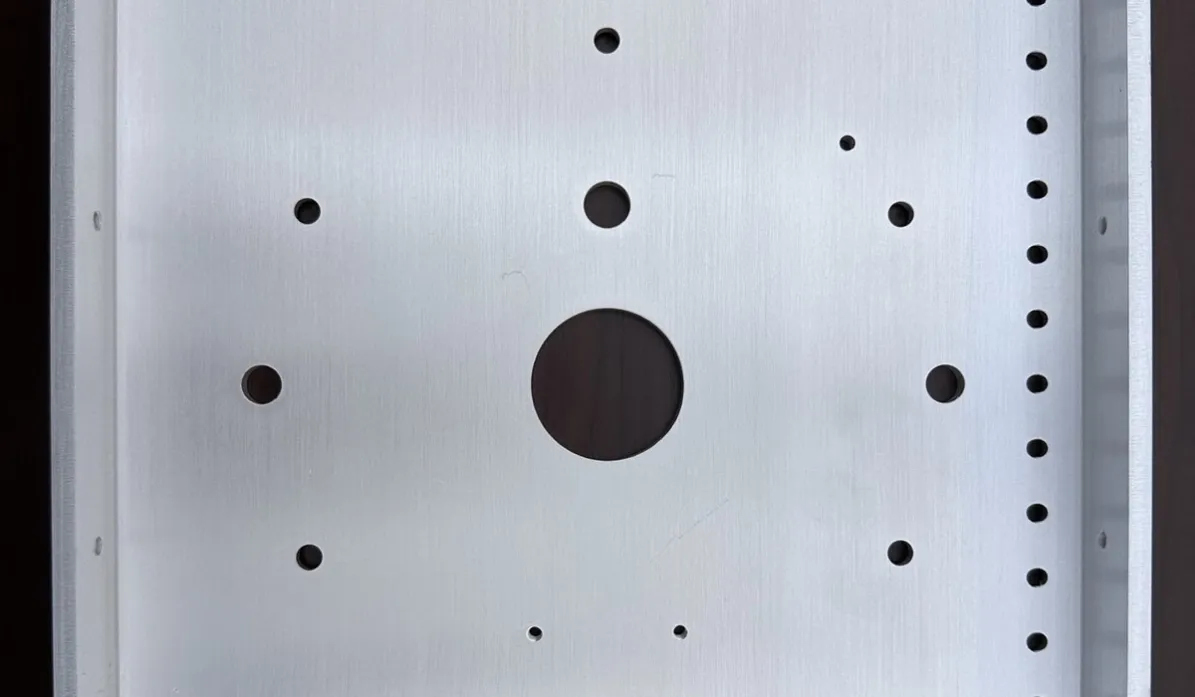
Yes — we make custom aluminum enclosures, and there are three ways to build one: machined from solid, folded from sheet metal, or built around an extruded profile. All three are regular work for us, so the honest question is not "can you make it" but "which route fits this box". Send the drawing — or even a sketch with the overall size — and we will quote the route that makes sense, and say so if a different route would serve you better.
The three routes, in plain terms
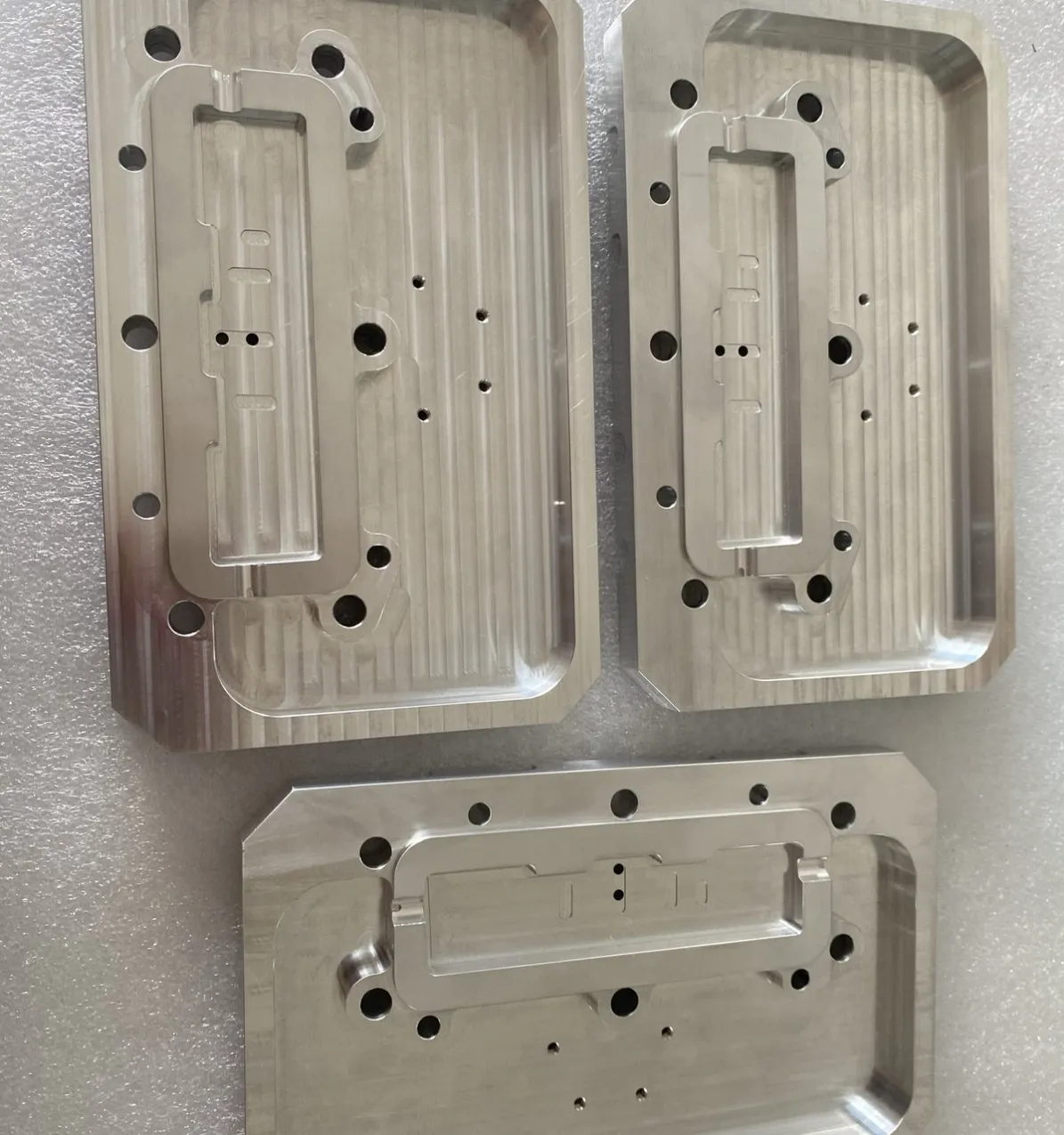
Machined from solid. The enclosure is milled from a block of aluminum, usually as a body plus a lid. Walls, bosses, pockets, heatsink fins and connector cutouts are all cut in the same setup, so features land exactly where the drawing puts them. This is the route behind the heatsink enclosures we machine, where the box itself is part of the cooling.
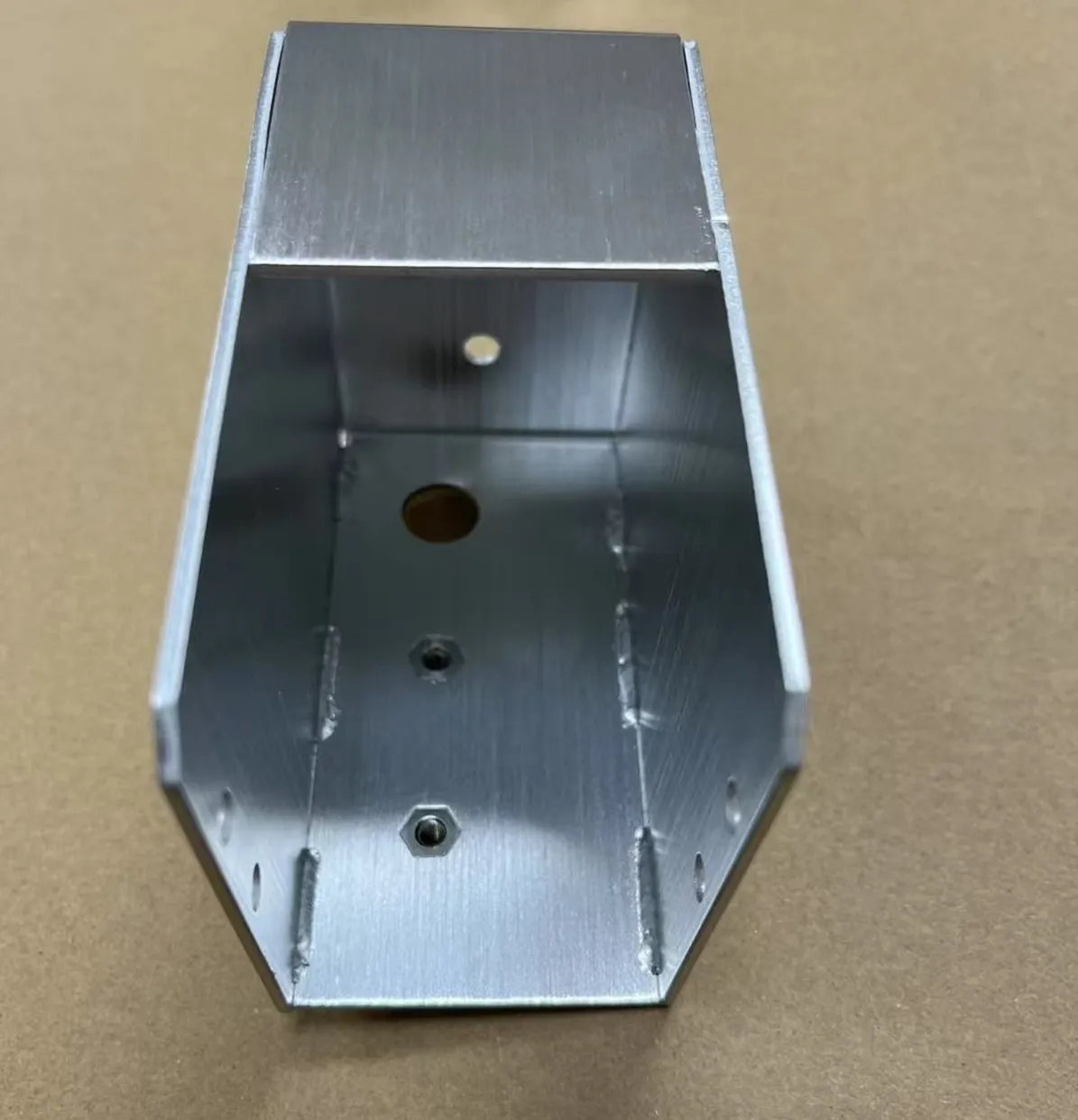
Sheet metal. The enclosure is laser cut flat, folded, welded or fastened at the corners, and finished — typically a base tray or U-shape plus a cover. Panels stay flat, which suits boxes full of connectors, displays and vents. Our brushed sheet metal enclosures and the sheet metal enclosures for EV charging equipment are this route.
Extruded profile. The enclosure starts from an aluminum extrusion with a fixed cross-section — often with slots, ribs or fin profiles already in it — cut to length, with the ends closed by machined or sheet end plates. Extra length costs very little; the real work is in the ends and the cutouts.
Side by side
| Machined from solid | Sheet metal | Extruded profile | |
|---|---|---|---|
| Design freedom | Highest — pockets, bosses, fins, thick and thin walls in one part | Flat panels and folds; features are holes, slots and bends | Cross-section is fixed; freedom is in length, ends and cutouts |
| Best quantities | Prototypes and small batches | Small to medium batches, and repeat runs | Small to medium batches of long boxes |
| Cost pattern | Material and machine time dominate; price per part falls slowly with quantity | Tooling is minimal; price per part falls well as quantity rises | Profile is cheap per length; end plates and machining dominate |
| Wall and structure | Thick, rigid, can carry threads and sealing faces anywhere | Thin walls; stiffness comes from folds and flanges | Rigid along the profile; end plates carry the features |
| Sealing | Best — O-ring grooves and machined faces anywhere | Needs care — folded corners are not natural sealing lines | Good along the profile; ends seal at the plates |
| Typical pick when | The box is also a heatsink, a mount, or a sealed housing | The box is mostly panels, vents and connector cutouts | The box is long, prismatic and the same section end to end |
Materials and finishes
Machined enclosures are usually 6061-T6 aluminum; sheet enclosures are usually 5052-H32 aluminum, which folds without cracking, and extruded enclosures use the profile grade the section is drawn in, most often 6063. Finishes are the same across all three routes: anodizing (clear or black, Type II, hardcoat where wear is expected), powder coating for folded boxes that need colour and toughness, and chem film where the enclosure must stay electrically conductive for grounding. Brushed finishes are available on sheet enclosures before coating.
What decides the route, honestly
- What lives inside. If the electronics bolt to the walls, dump heat into them, or need a sealed, machined face, solid machining earns its cost. If the box is a shell around a chassis, it usually does not.
- Quantity — now and later. Ten boxes and ten thousand boxes are different products. A design that starts machined for prototypes often moves to sheet metal for production, and we will tell you where that crossover sits for your drawing rather than selling you the expensive route twice.
- The corners and the seal. Folded corners and extruded ends are the weak points of the cheaper routes. If the enclosure has a sealing requirement, that — not the panel size — usually picks the route.
- Length. A long, constant-section box is where extrusion wins outright; machining the same box from solid pays for a lot of removed metal.
Inspection and packing
Enclosures are checked against the drawing — overall size, hole and cutout positions, fold angles on sheet parts, flatness of lids and sealing faces. Assembled sets (body, lid, end plates) are trial-matched before packing where the set is supplied together. Finished faces are protected in packing, with anodized and powder-coated parts separated so coatings arrive unmarked. First article reports and material certificates are available on request.
What to send for a quote
The drawing or model if you have one; if the route is not yet chosen, the overall size, what mounts inside, any sealing or heatsinking job the box has to do, the finish, and the quantity — for the first run and for repeat runs if they differ. That is enough for us to quote a route and explain the choice. Send your drawing / sample for a quote via our contact page — enquiries are answered within 8 hours and quotes usually come back within 24 hours.
FAQ
Which route is cheapest? It depends on size and quantity, which is why the table above is a guide rather than a price list. For a small batch of compact boxes, machining is often competitive because there is no tooling and no waste beyond the block. As quantity or size grows, sheet metal usually takes over on price; extrusion wins on long boxes at almost any quantity.
Can a machined prototype design move to sheet metal later? Usually, yes — but the design has to be redrawn for folds, bend radii and corner joints, and it is far easier if that move is planned from the start. Tell us production is coming and the prototype will be designed with the transfer in mind.
Can you put heatsink fins on an enclosure? Yes — fins are machined into solid enclosures, and finned profiles exist for the extruded route. If the box has a cooling job, say so with the enquiry; it often decides the route on its own.
Do the three routes give the same finish quality? The finishes are the same processes, but flat sheet and machined faces show brush lines and texture differently, and extruded surfaces carry the lines of the profile. If two parts of a set must match visually, tell us — matching a lid to a body across routes is a finishing question, not an afterthought.
What tolerance do enclosures hold? Standard work is ±0.1 mm (±0.004") on machined features, with ±0.01 mm (±0.0004") available where a feature genuinely needs it. Sheet metal work is held to ±0.1 mm (±0.004") as standard. Overall size on a large enclosure is usually governed by flatness and fold accuracy rather than a single tight number — tell us what has to fit and we will quote to it.
Can you supply the enclosure assembled with its lid and plates? Sets are supplied trial-matched and packed together. If you want hardware fitted, say so with the enquiry and we will confirm what can be included.