Sheet Metal Enclosures for EV Chargers
Sheet metal enclosures for EV charging equipment: laser cutting, bending, welding and powder coating, with the sealing, venting and finish details designed in.
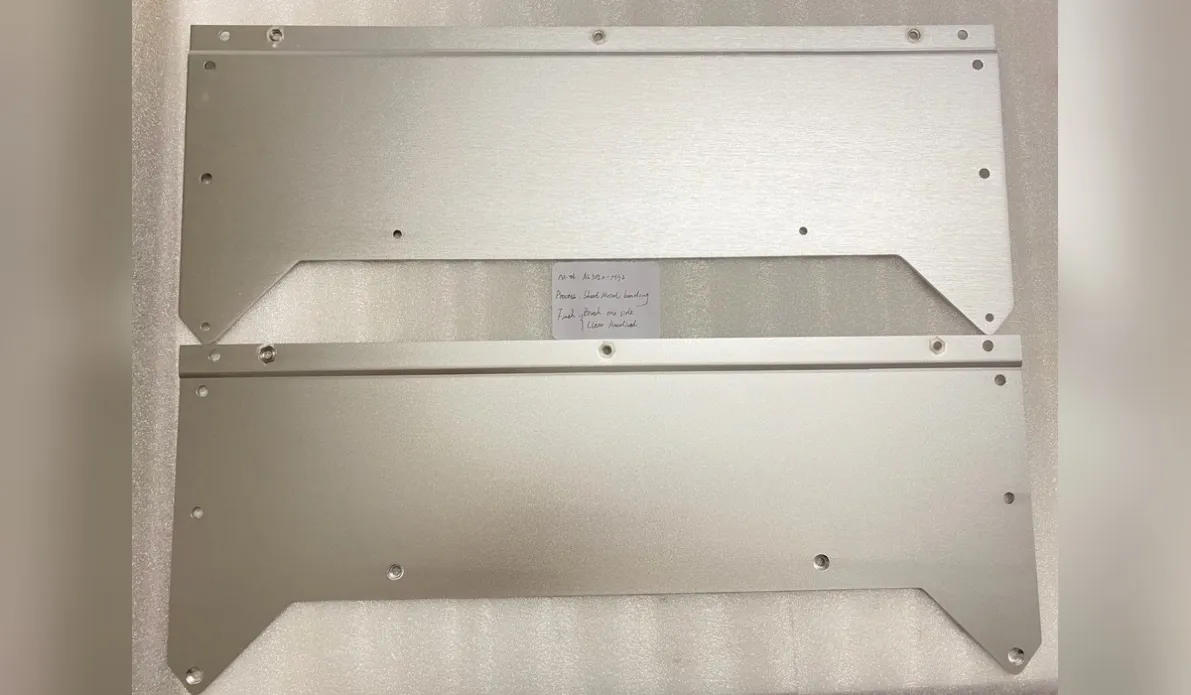
An EV charger lives outdoors, in public, being rained on, baked, frozen and leaned against — and its enclosure is the only thing between that environment and the electronics inside. We fabricate sheet metal enclosures for EV charging equipment, from development prototypes through small production runs. This page walks the fabrication route and the design details that decide whether an enclosure protects the equipment or just covers it.
The fabrication route
The enclosure starts as flat sheet: laser cutting produces the blank with its openings, vents and mounting holes in one operation; bending forms the shell and its flanges; welding closes the corners and seams that bending cannot; and powder coating provides the outdoor finish. Each stage is a page of its own in our library — the sheet metal design tips cover the bend radii, flange lengths and hole positions that make a design fabricate cleanly, and choosing a sheet metal material covers the sheet itself, from 5052-H32 aluminum to galvanized and cold-rolled steels.
Sealing is a design feature, not an afterthought
Whether an enclosure keeps water out is decided by its seams, not by hope. The fabrication-level decisions are: folded flanges and returned edges that shed water instead of collecting it; seam placement that keeps joints out of the direct weather path; continuous, dressed welds at corners that must be closed; and flat, true mating faces where a door or panel meets a gasket. We build to the sealing design on your drawing — the enclosure's protection rating is certified by you as the equipment maker, and our job is to make the metalwork match the design that earns it: flanges where they are drawn, gaps where they are specified, and no improvisation at the seams.
Heat has to get out
Charging electronics generate heat in a sealed box in the sun. Ventilation openings — louver patterns, perforated zones, fan apertures — are cut in the same laser operation as the rest of the blank, positioned where your thermal design puts them, with edges finished so they are not finger hazards in a public place. Cable entries and gland plates are cut and fitted to the same standard: an opening is only useful if the cable that passes through it can be sealed as the design intends.
Powder coating for outdoor life
The finish is the enclosure's first weather barrier. Powder coating over properly prepared metal — cleaned, pretreated, then coated to a consistent film — is the standard for this equipment, and color consistency across a production run matters because chargers stand in rows. The finish options and their trade-offs are compared in our sheet metal finishes piece. Screen printing and labeling for instructions and branding can be applied over the coating where the design calls for it.
From prototype to production
Charging equipment is usually developed iteratively: a first enclosure proves the fit and the thermal behavior, the design moves, and then small batches follow. The same cutting, bending and welding route serves all three stages, so the prototype is made the way the production units will be — no process change hiding between the sample you approved and the batch that follows. Inside the enclosure, the build often includes machined parts as well — the copper busbars that carry the current are a typical example — and enclosure and internals can be quoted together.
Send the drawings through our contact page — flat patterns or 3D models, the material and gauge, the finish and color, and any sealing or venting requirements stated. We respond within 8 hours and normally quote within 24 hours.
FAQ
Can you fabricate a complete charger enclosure, not just panels? Yes — the full shell: laser-cut blanks, bent and welded construction, doors and panels with their hardware faces, finished in powder coating. The electronics and certification remain yours; the metalwork is ours.
Do your enclosures carry an IP rating? The rating belongs to the finished equipment and is certified by the equipment maker. We fabricate to your sealing design — flanges, seams, welds and gasket faces as drawn — so the enclosure can achieve the rating your design targets.
What materials do you use for outdoor enclosures? 5052-H32 aluminum, galvanized steel (SGCC) and cold-rolled steel (SPCC / CRS) with powder coating are the common choices, selected for the environment and the finish. Stainless is used where the design specifies it.
Can ventilation and cable entries be built in? Yes — louvers, perforation patterns, fan apertures and cable entry plates are cut in the laser operation and finished as part of the enclosure, positioned to your thermal and cabling design.
Do you make prototypes before production batches? Yes — prototypes run on the same fabrication route as production, so an approved prototype represents the batch process exactly.