Blog
Vacuum Casting vs Injection Molding: Which Fits Your Batch?
Vacuum casting vs injection molding compared honestly: tooling cost, per-part cost, batch sizes and lead times — and when each process is the wrong choice.
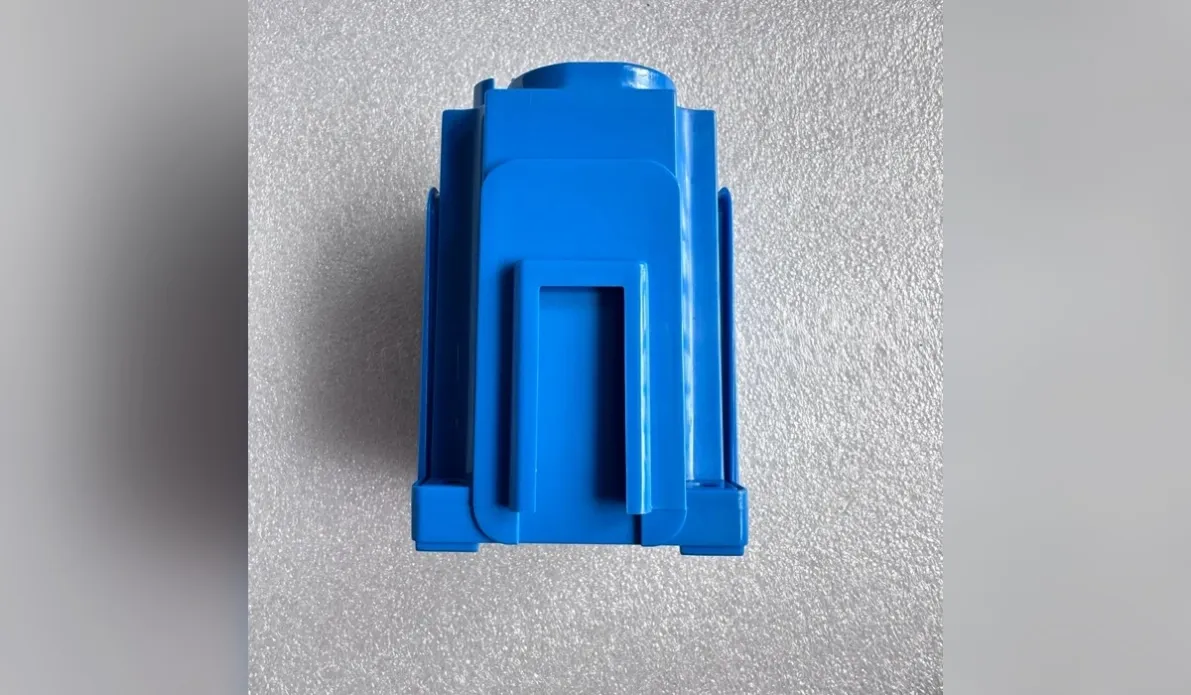
Both processes make plastic parts that look similar on a desk. Underneath, they could hardly be more different — and picking the wrong one for your quantity either burns money on tooling you did not need or burns it on per-part costs that never come down.
Here is the honest comparison we give customers, including the cases where we talk people out of the more expensive option.
The One-Sentence Difference
Vacuum casting pours polyurethane resin into a soft silicone mold under vacuum; injection molding forces molten plastic into a hard steel mold under pressure. Almost every difference between the two follows from that: silicone is cheap and quick to make but wears out, steel is expensive and slow to make but lasts.
Side by Side
| Vacuum Casting | Injection Molding |
|---|---|---|
Tooling | Silicone mold from a master part | Machined steel mold |
Typical quantity | Tens of parts per mold | Thousands of parts and up |
Lead time to first parts | Short — days to make the mold, then casting | Longer — weeks to cut and trial the steel tool |
Per-part cost trend | Higher, and flat — part 50 costs about what part 5 did | Low once running, and drops with volume |
Tool life | Limited run before the mold loses detail | Long production life |
Materials | PU resins that mimic ABS, PC, rubber-like grades and others | The actual production resins, full range |
Finish and texture | Good surface from a good master; fine detail carries over | Full range, including SPI/VDI mold textures |
Design changes | Cheap — make a new master and a new silicone mold | Expensive — modifying steel takes time and money |
These are rough guides, not hard borders. Parts sit on a spectrum, and size and complexity move the numbers around. But the shape of the decision is consistent.
When Vacuum Casting Wins
Choose vacuum casting when any of these are true:
- The design is still moving. If there is a real chance the part changes after you hold the first batch, do not cut steel yet. A revised casting master is a small job; a revised steel mold is not.
- You need tens of parts, not thousands. Pilot builds, demo units, market testing, and early production runs all live here.
- You need parts soon. Silicone molds are ready far faster than steel tools, so first parts arrive sooner.
- The parts need to look production-real. Cast parts from a good master are convincing stand-ins for molded parts — right for investor demos, trade shows, and customer trials.
The catch to plan around: because molds wear, vacuum casting does not scale gracefully. Ordering batch after batch means paying for fresh molds, and per-part cost never really falls. It is a bridge process, and a very good one — as long as you cross the bridge.
When Injection Molding Wins
Choose injection molding when the picture looks like this:
- The design is frozen. You have validated fit and function, ideally with machined or cast prototypes, and changes are unlikely.
- Volumes are real. Thousands of parts, or a smaller number repeated over a long product life. The tool cost spreads across the run until the per-part price is a fraction of casting.
- You need the actual material. If the part must be a specific production resin for regulatory, mechanical, or environmental reasons, molding is the way to get it.
- You need molded texture and finish. SPI and VDI texture standards are applied to the steel mold itself, giving consistent surface finishes across the whole production run — something casting approximates but does not match.
The risk is committing too early. A steel mold cut for a design that changes twice more is one of the most expensive mistakes in product development, and it is usually made by skipping the prototype stages to "save time."
The Middle Path Most Parts Actually Take
In practice, many parts use both, in order. Machined or cast prototypes validate the design. Vacuum casting covers the pilot phase while demand is uncertain. Once orders justify it, the design — by then thoroughly tested — goes into a steel mold, and casting retires.
That sequence costs a little more in the early months and saves a great deal later, because the expensive decision (the steel tool) is made with a proven design instead of a hopeful one.
Our Advice Is Not Biased, Because We Run Both
We offer both vacuum casting and injection molding, and we machine the prototypes that come before either. That means the recommendation you get from us is based on your quantity and design status, not on which process we happen to sell. If casting is right for your batch, we will say so even though molding is the bigger job — and if you have outgrown casting, we will show you where the numbers cross over.
Tell us the part, the quantity you need now, and the quantity you hope for later, and we will lay out both routes with lead times so you can compare. Start with our vacuum casting and injection molding pages, or send your drawing for a quote — we reply within 8 hours, and quotes are usually back within 24 hours.