Turned Shaft Parts: Flanges, Long Shafts, and Knurled Knobs
Shafts, flanges and knurled knobs are the bread and butter of CNC turning. The details that separate careful turned parts from careless ones.
Walk through any machine, instrument, or vehicle and you'll find the same family of parts holding it together: shafts, flanges, and the knobs that let a human hand adjust them. They are the bread and butter of CNC turning — and because they look simple, they're where the difference between a careful shop and a careless one quietly shows.
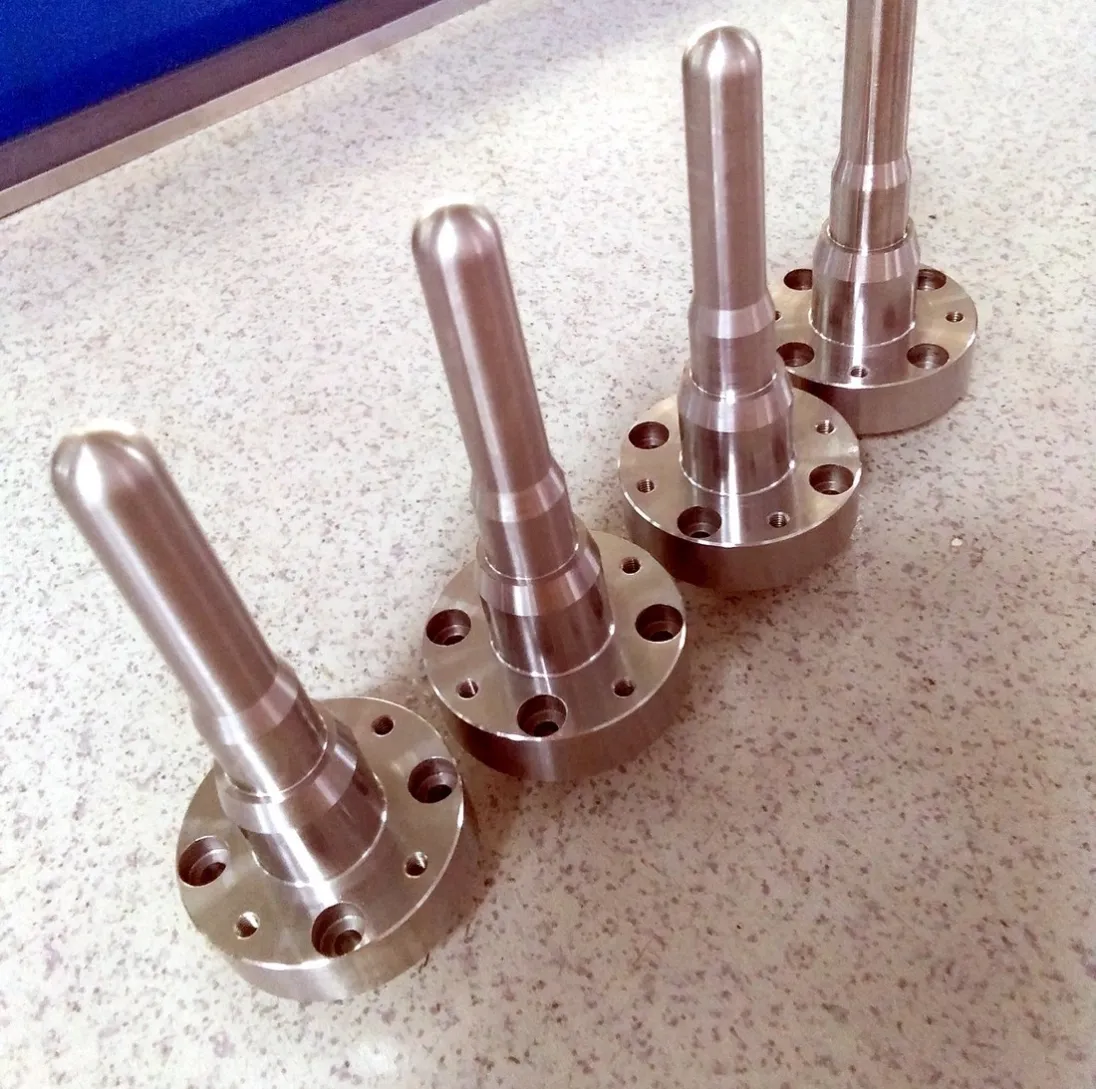
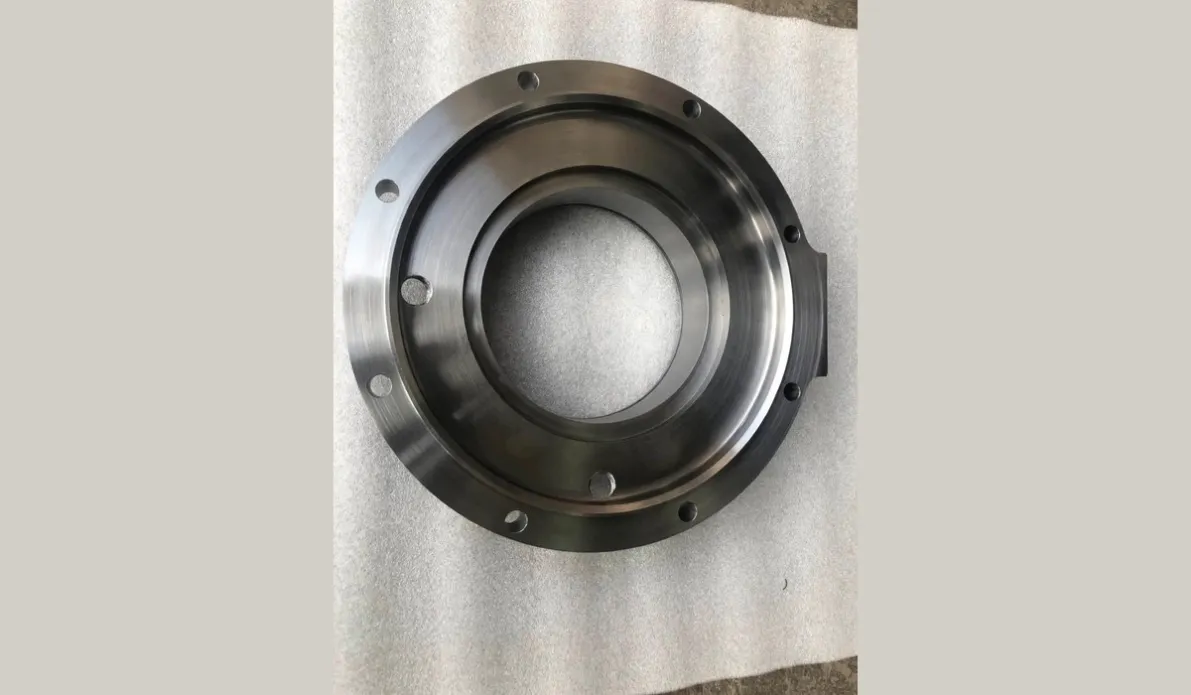
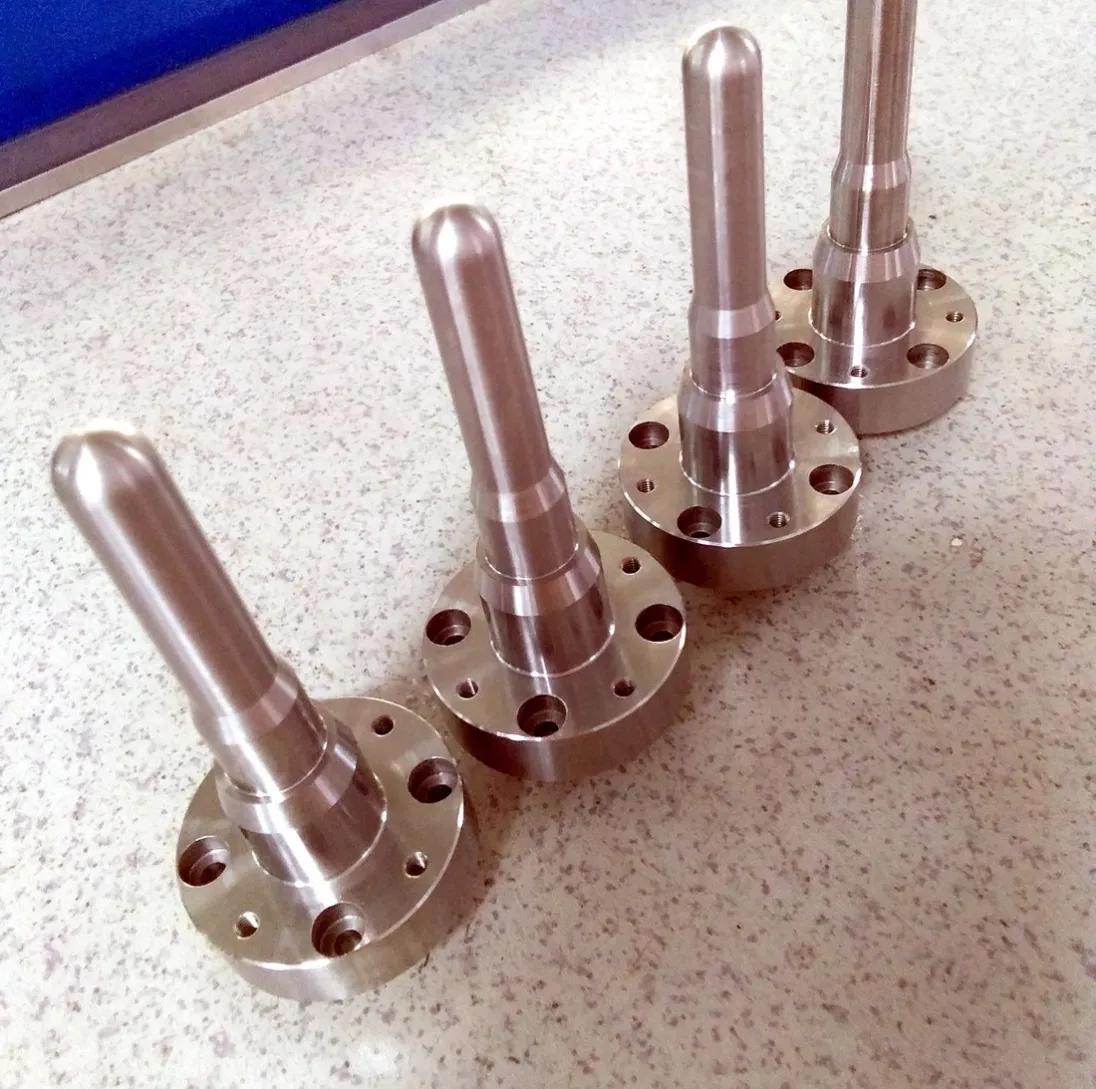
The three parts in the photos cover the family well: a 304 stainless steel flange, a set of long flanged shafts in 6061 aluminum, and an assembled unit — a threaded 304 shaft with a knurled 440C knob. Here's what each one demands.
Flanges: Flat Faces and Honest Bolt Circles
A flange has two jobs: present a flat face that seals or seats against something, and put its bolt holes where the mating part expects them. The machining follows from that. The mounting face gets a proper finishing pass — flat, with a surface finish suited to whether it carries a gasket, an O-ring, or a metal-to-metal joint. The bolt circle is drilled or interpolated in the same setup as the bore it relates to, so hole position and bore concentricity come from the machine's accuracy rather than from a second setup's alignment.
Stainless flanges like the 304 one pictured are typically passivated after machining to restore the corrosion-resistant surface. Our standard turning tolerance is ±0.1 mm, with ±0.01 mm held on bores and faces where the drawing calls for it.
Long Shafts: The Fight Against Deflection
A long, slender shaft is the part a lathe least wants to make. The cutting tool pushes, the shaft bends away — a little at the ends, a lot in the middle — and the result is a barrel-shaped part that's on size at both ends and fat in the center. Turning the flanged shafts in the photo, in 6061 aluminum, is about managing exactly that:
- Support the work. Turning between centers, using a steady rest or follow rest on long spans, and keeping the tool overhang short all reduce how far the shaft can run from the cutter.
- Rough first, finish last. Bulk material comes off in roughing passes; the final diameter is taken with a light, sharp finishing cut that barely pushes on the part — and the part is measured along its whole length, not just at the end nearest the chuck.
- Concentricity is set in one setup. The flange, the journals, and the end features are turned without re-chucking wherever possible, so everything runs true to the same axis. A shaft that has to be flipped gets its second side indicated in carefully, not just gripped and hoped for.
Aluminum helps here — it cuts with low force — but low cutting force is a help, not a solution. The process still has to be planned around the part's stiffness, or lack of it.
Knurled Knobs: Grip You Can Machine
The assembled unit in the third photo pairs a threaded stainless shaft with a knurled knob in 440C — a sensible material pairing: 304 for the corrosion-resistant threaded shaft, hardened 440C for the knob that hands will twist and that has to keep its crisp knurling and resist wear over years of adjustment.
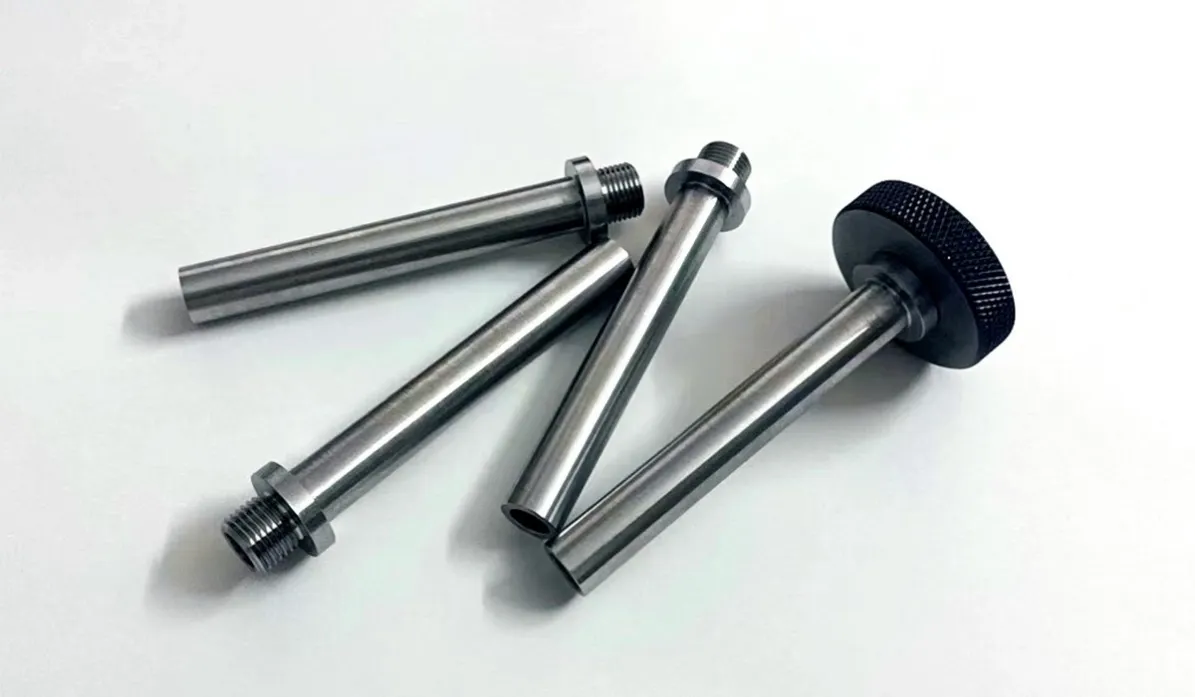
Knurling looks decorative and is anything but. The diamond or straight pattern rolled or cut into the knob's rim is what lets fingers — or gloved hands, or oily hands — actually turn it. Two details decide whether a knurl comes out well:
- Blank diameter matters. A knurl displaces metal rather than removing it (in form knurling), so the blank is turned to a calculated diameter beforehand; get it wrong and the pattern comes out shallow, doubled, or torn.
- The knurl is not a tolerance feature. The major diameter over a knurl is approximate by nature — what matters is the pattern depth and feel. Drawings that put a precision tolerance across a knurl create inspection arguments; put the tight numbers on the bore, the thread, and the locating faces instead, and let the knurl be a knurl.
Threads on an assembly like this are gauge-checked, and the knob-to-shaft fit is verified as an assembly, not just as two separate parts that each passed.
One Family, One Setup Philosophy
Flanges, shafts, and knobs share a theme: the features that matter — bores, faces, journals, threads — are related to each other, and they come out best when they're machined in relation to each other, in as few setups as possible. That's how we run turned parts, whether it's a one-off prototype or a production batch.
If you have shaft-type parts to source, send the drawings through our CNC turning page. Quotes come back within 24 hours, prototypes typically ship in 3–5 days, and FAI reports, material certificates, and a certificate of conformance are available on request. NDAs welcome.