What Stripping Anodize Does to Tolerances
Stripping anodize for rework costs size — about half the coating thickness per face, each cycle. What that means for bores, threads and tight tolerances.
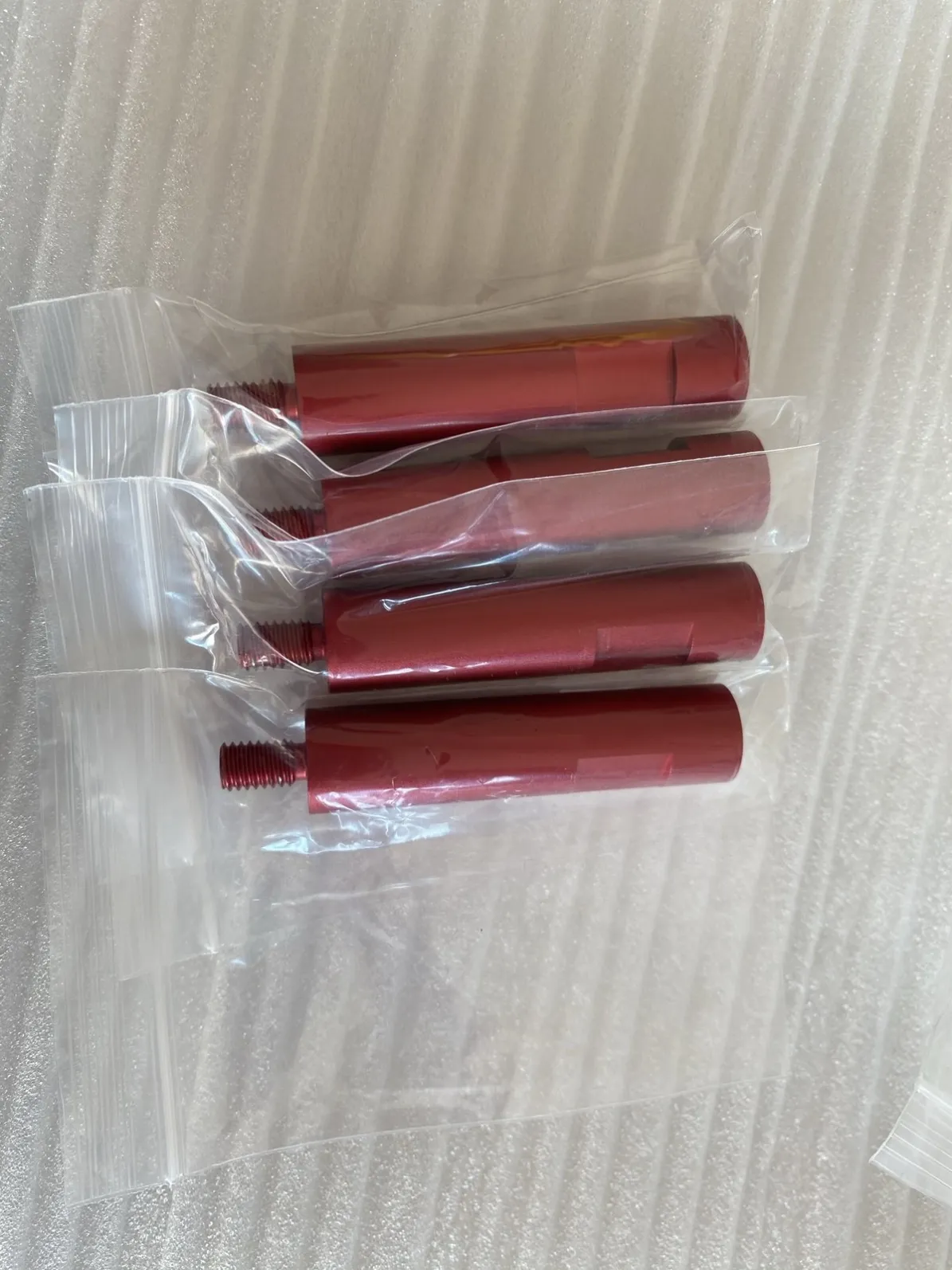
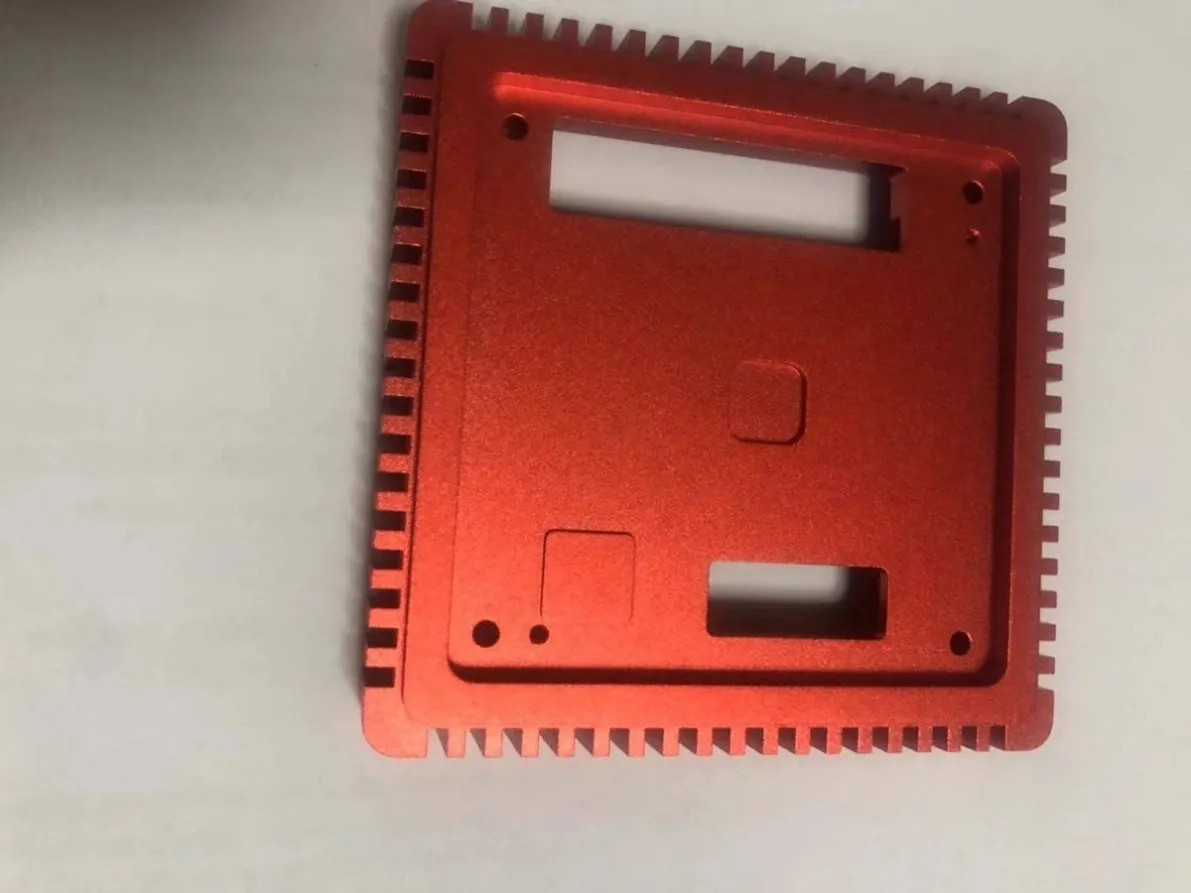
Anodized parts sometimes have to be stripped and redone — the color came out wrong, the coating has a defect, or a masked face got coated by mistake. The rework itself is routine. What is less obvious is that stripping is not free: every strip-and-recoat cycle makes the part slightly smaller, and on a tight tolerance that "slightly" can be the whole tolerance band. This article explains where the size goes, how much a cycle costs, and how to plan for rework before it happens. If a part of yours needs rework, send the drawing via our contact page — we will measure it after stripping and tell you honestly whether it can come back in tolerance before anything is recoated.
Why anodize gets stripped
The common reasons are cosmetic or process mistakes, not machining mistakes:
- Color mismatch. The shade is off the approved sample, or one batch does not match the next.
- Coating defects. Burn marks, pitting, streaks or thin spots in the coating.
- Wrong specification. Type II supplied where hardcoat was called up, or the coating thickness is out of range.
- Masking errors. A grounding face or threaded hole that should have stayed bare got coated.
In all of these the machining underneath is fine — which is exactly why rework is tempting. The question is what the strip does to the dimensions.
Anodize is not a layer sitting on top
The key point, and the one that decides everything below: an anodize coating is not like paint. Paint sits on the surface. Anodize grows out of the metal itself — roughly half of the coating thickness builds up above the original surface, and roughly half penetrates below it, converting the surface aluminum into oxide.
So on a part anodized to 25 µm (0.001"), about 12 µm (0.0005") of that coating is converted metal below the original surface line. When the coating is stripped, all of the oxide comes off — including the converted half. The surface the strip leaves behind sits about 12 µm below where the machined surface used to be.
Re-anodizing then grows a new coating from that lower surface, half in and half out again. The rebuilt surface ends up about 12 µm (0.0005") per face below the original finished surface. That is the cost of one cycle, before the strip solution itself removes anything.
The strip solution takes a little more
There are two common ways to strip anodize:
- Caustic strip (sodium hydroxide based). Fast and cheap, but the solution does not stop at the oxide — it also dissolves some of the base aluminum while the part is in the tank. How much depends on time, temperature and alloy. High-copper alloys such as 2024-T3 and 7075-T6 are attacked faster than 6061-T6, and they can come out darkened and in need of extra cleaning.
- Acid strip (chromic-phosphoric type). Slower, and it dissolves the oxide with very little attack on the base metal. This is the method to ask for when dimensions matter.
Either way, the total loss per face per cycle is the penetration share of the old coating — about half its thickness — plus whatever the strip itself takes. On a standard Type II coating that is typically in the region of 10–15 µm (0.0004–0.0006") per face.
What that does to real dimensions
Dimensions change on both sides of the part, so diameters move by twice the per-face figure:
- Outside diameters and widths shrink by roughly 20–30 µm (0.0008–0.0012") per cycle on a typical Type II coating.
- Bores and holes grow by the same amount — the surface moves away on both sides.
- Threads move twice over: the strip enlarges the thread, the recoat only rebuilds part of it, so a thread that was mid-tolerance can drift toward or past its limit. Check threads with a gauge after rework, not by assumption.
- A ±0.01 mm (±0.0004") bore has a total band of 20 µm. One strip cycle on a standard coating can move it by more than the whole band. Tight bores are the first casualty of rework, every time.
- Hardcoat (Type III) runs much thicker than Type II, so the same arithmetic costs more per cycle. A hardcoated precision part is the worst candidate for strip-and-recoat.
Standard tolerances — ±0.1 mm (±0.004") work — absorb one cycle without drama. It is the precision features that need a decision before the part goes into the strip tank.
Can a part be stripped more than once?
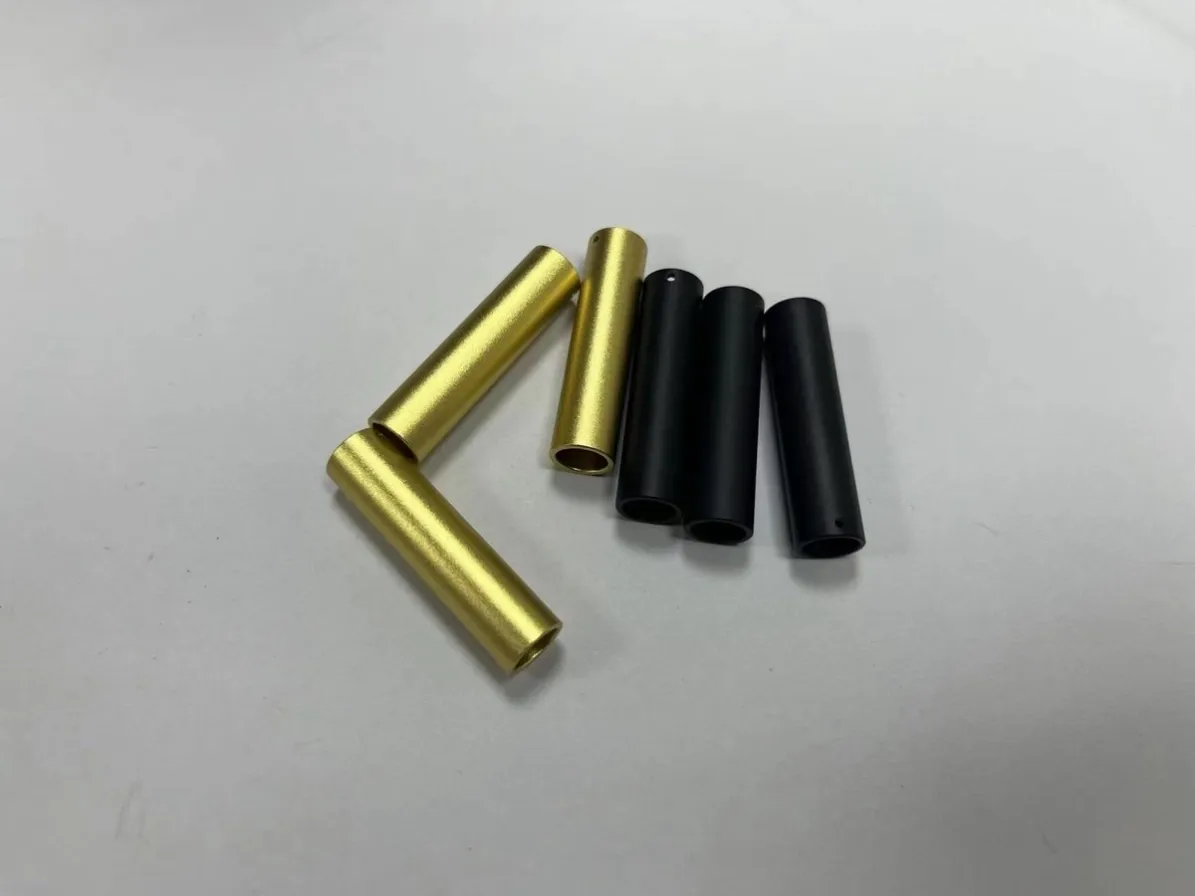
Technically yes; the loss simply adds up. A second cycle costs roughly the same again, so a part that survived one rework inside a ±0.05 mm band may not survive two. Our working rule: one strip-and-recoat on precision parts is usually recoverable if it was planned for; repeated rework is how good parts become scrap. If a finish keeps failing, fix the finishing process — do not keep stripping the same parts.
Two surface effects come with the territory. The bead-blasted texture under the old coating is stripped away with it, so the part has to be re-blasted before recoating to get the same matte finish back. And a caustic strip can soften very sharp edges slightly. Neither matters on most parts; both are worth knowing on cosmetic housings.
How to keep rework from scrapping parts
- Say rework is possible before machining, not after. If a new color is being approved or the finish is unproven, tell us at the quote stage. We can hold critical dimensions on the safe side of the tolerance band — outside diameters toward the top, bores toward the bottom — so a strip cycle lands the part back inside the band instead of outside it.
- Ask for the acid strip on tight-tolerance parts. It costs a little more time and saves real metal.
- Measure after stripping, before recoating. A stripped part can be inspected and the recoat thickness planned around what is actually there. Once the new coating is on, the options are gone.
- Protect the features that cannot move. If a bore or thread genuinely has no room for a cycle, say so — sometimes the right answer is to rework the finish and re-machine one feature, or to remake the part, rather than recoat and hope.
FAQ
How much size do you lose stripping anodize? About half the coating thickness per face, plus a small amount the strip solution takes from the base metal. On a typical 25 µm (0.001") Type II coating, expect roughly 10–15 µm (0.0004–0.0006") per face per cycle — double that on diameters.
Can hardcoat be stripped and redone? It can, but hardcoat is much thicker than Type II, so the dimensional loss per cycle is larger, and stripping it is slower. On a hardcoated part with precision features, get the stripped part measured before agreeing to recoat.
Does re-anodizing bring the part back to its original size? No. The new coating grows from the stripped surface, which already sits lower than the original machined surface. The part comes back about half a coating thickness per face smaller than the first finished part.
Can you strip only the area that is wrong? Not practically. Stripping is an immersion process — the whole part goes into the tank. Small local defects are sometimes better handled by touching up or remaking the part than by stripping the whole thing.
Will the color match after rework? Usually yes, if the part is stripped fully, re-prepped and dyed in a fresh batch — but a reworked part can shade very slightly differently from parts anodized once, because the surface underneath has been etched twice. For a matched set, rework the set together.