Welding Methods for Sheet Metal
Laser, TIG, MIG and spot welding for sheet metal compared: which method suits which material and thickness, and how to choose for your parts.
Yes — we weld sheet metal by all four common methods: laser welding, TIG (argon arc) welding, MIG welding and resistance spot welding. There is no single best one; the right choice follows the material, the thickness and what the joint has to look like. This article goes through the four in plain terms so you can specify — or sanity-check — the method on your parts. For what to write on the drawing once the method is chosen, see our article on specifying sheet metal welding. Send the drawing and the quantity and we will quote it — inquiries are answered within 8 hours and quotes usually come back within 24 hours.
Laser welding
A focused laser beam melts a narrow line along the joint. The heat-affected zone is very small, so thin sheet barely moves — that is the method's headline advantage.
Best for: thin stainless steel and carbon steel sheet, fine seams on enclosures, parts where distortion must stay minimal and the seam will be visible. The weld is narrow and neat, often needing little or no dressing before coating.
Limits: the joint faces must fit together closely — a laser does not bridge gaps the way MIG does — and it is not the economical choice for thick sections. On aluminum it works, but TIG is more often the practical choice for fabricated aluminum parts.
TIG welding (argon arc)
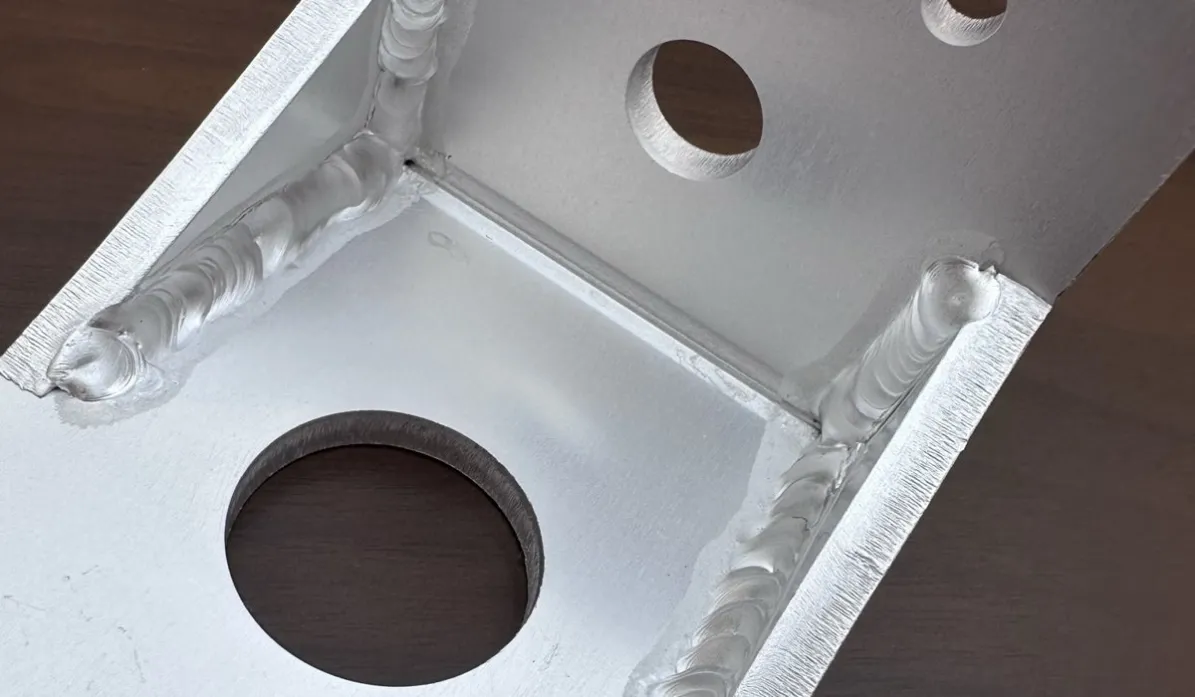
An electric arc under argon shielding gas melts the joint, with filler rod added by hand where needed. It is the slowest of the four and the most controlled — the welder sees the pool and shapes the bead as it goes.
Best for: stainless steel and aluminum — visible joints on enclosures, tanks, frames and covers where the bead quality matters and the part may be used as-welded or lightly dressed. It handles thin sheet well and corners and attachments of all kinds.
Limits: speed. On long seams in thick carbon steel, TIG is craftsmanship applied where MIG would do the same job in a fraction of the time, and the quote reflects that.
MIG welding
A wire electrode feeds continuously through the torch, melting into the joint under a shielding gas. Fast, tolerant of small fit-up gaps, and strong — the workhorse for heavier fabrication.
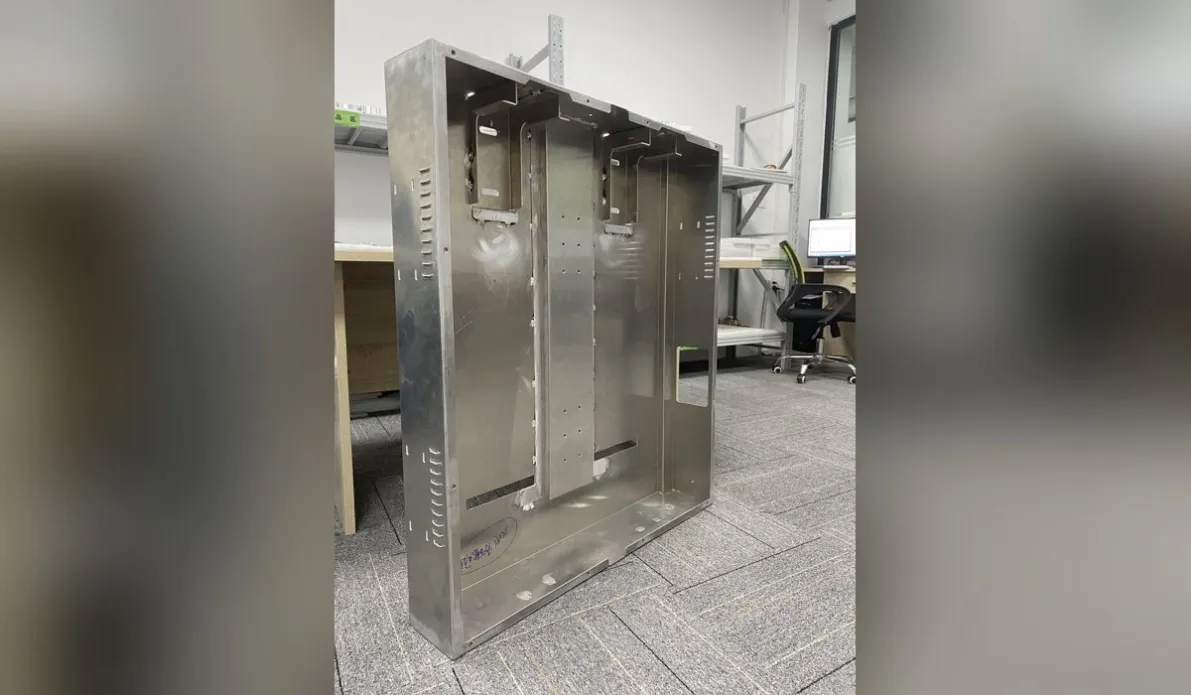
Best for: carbon steel frames, thicker sections, structural brackets and longer seams, including the frames behind our sheet metal equipment frames and panels. Also used on stainless and aluminum in thicker sections where appearance is secondary.
Limits: more heat input than laser or TIG, so thin sheet distorts more readily, and the bead is wider and usually needs dressing on visible faces. Spatter control matters on finished surfaces.
Resistance spot welding
Two electrodes pinch overlapping sheets and pass a current through the stack; the sheets fuse at the contact point. No filler, no seam — a row of individual weld nuggets.
Best for: overlapping flanges and hems on enclosures, covers and light assemblies in mild steel, galvanized steel and stainless — especially in quantity, where its speed and repeatability win. The joint is made from one side's access and leaves only small marks.
Limits: it only works on lap joints, the strength is in the row of spots rather than a continuous seal (a spot-welded joint is not liquid-tight), and thick stacks or aluminum need more from the equipment — for aluminum assemblies, TIG or laser is usually specified instead.

Choosing by material
| Material | First choice | Also used | Notes |
|---|---|---|---|
| Stainless steel sheet | Laser or TIG | Spot (lap joints), MIG (thick sections) | Laser keeps thin sheet flat and the seam neat; TIG for visible corners and attachments |
| Aluminum sheet | TIG | Laser (close-fitting thin joints), MIG (thick sections) | Aluminum moves heat fast, so controlled TIG input gives the cleanest fabricated joints |
| Carbon steel sheet | MIG | Laser (thin, low distortion), TIG (fine work), spot (lap joints) | MIG is the economical default; laser is the better call when flatness matters |
| Galvanized steel sheet | Spot or MIG | TIG for small visible work | The zinc coating burns off at the weld either way; welded areas are finished over with the rest of the part |
Two rules of thumb sit behind the table. Thin sheet rewards low heat: laser first, TIG second. Thick sections reward deposition speed: MIG. And wherever the joint is a simple overlap in quantity, spot welding is hard to beat on cost per joint.
After welding
Whichever method is used, the finishing sequence is the same: beads dressed where the drawing requires it, the assembly cleaned, and the finish applied over the whole part at once — powder coating, paint, or passivation for stainless. Method choice does change how much dressing a visible seam needs: a laser seam may go to coating almost as-welded, a MIG seam on a show face will be ground and blended first. If a face is a cosmetic show face, say so, and the method and the dressing are planned around it.
What to send for a quote
The drawing or 3D model, the material and thickness, the finish and the quantity. If your specification already names a welding method, we weld to it; if it does not, we choose by material and joint type and can tell you which method we have quoted and why. Send your drawing for a quote via our contact page.
FAQ
Which welding method is strongest? Strength is rarely the deciding factor — a properly made joint by any of the four methods is at least as strong as the sheet around it. The choice is made on distortion, appearance, joint type and cost, not on strength alone.
Which method distorts thin sheet least? Laser welding, by a clear margin — its heat input is the lowest and the most concentrated. TIG is next. MIG puts the most heat into the part and is better reserved for thicker sections.
Can aluminum sheet be spot welded? It is possible with specialized setups, but for fabricated aluminum parts TIG (or laser on close-fitting thin joints) is the practical specification, and that is what we quote unless your drawing says otherwise.
Do I have to specify the method on my drawing? No. Specifying the joint, the finish and which faces are visible is enough — we select the method by material and thickness. If your industry or your customer specifies a method, put it on the drawing and we follow it.
Will the weld show through powder coating? An undressed bead will. That is why visible seams are dressed and blended before coating, and why the method matters: laser and TIG seams need far less dressing than MIG to disappear under the coat.