Powder Coating Racking and Hook Marks
Powder-coated parts hang from hooks, and every hook leaves a small bare mark. Where the marks land is a design decision — here is how to control it.
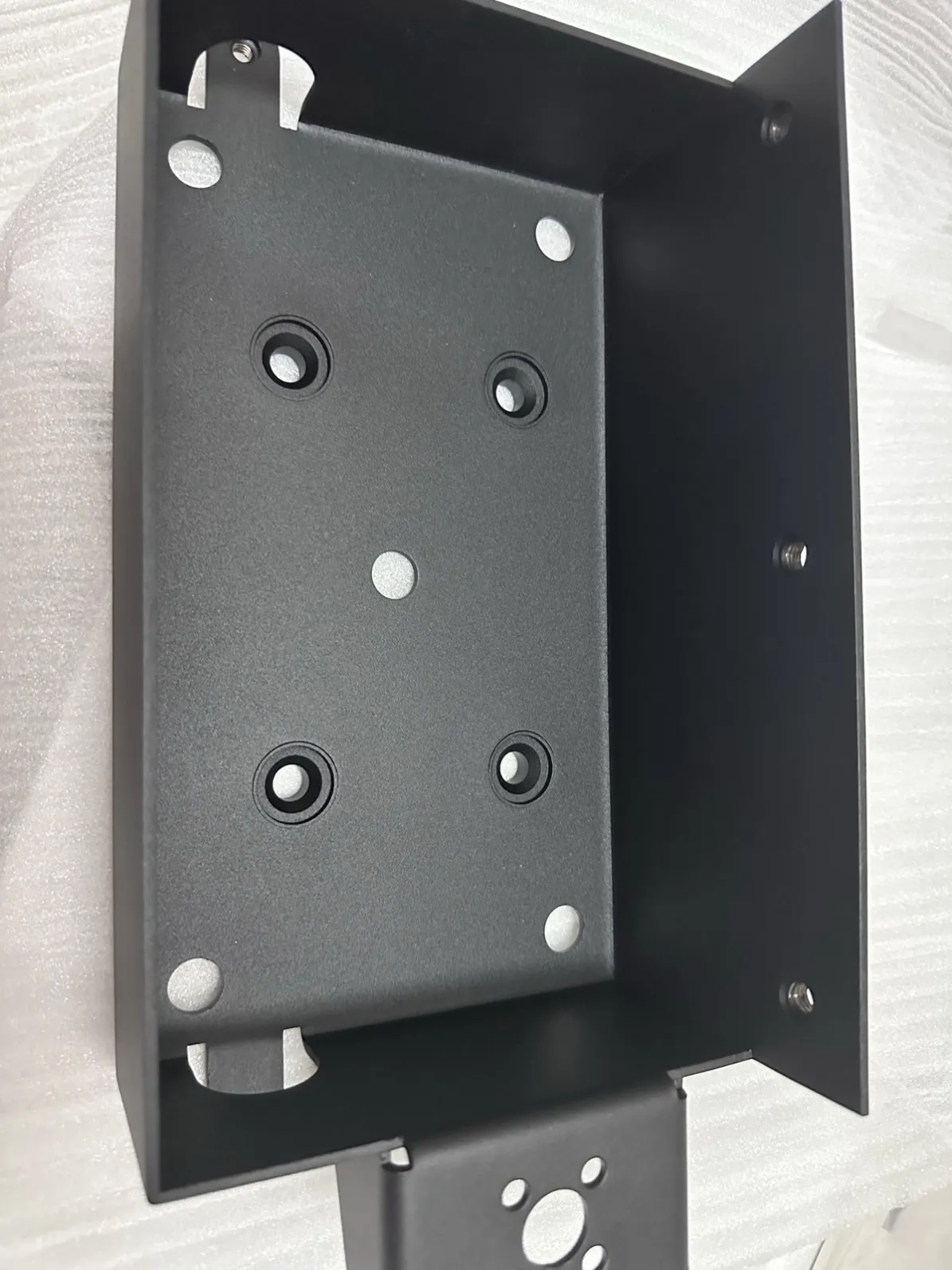
Every powder-coated part has at least one small spot with no coating on it. It is not a defect and it is not carelessness: the part has to hang in the booth and the oven, the hook that holds it is also its electrical ground, and where metal touches metal, powder cannot land. The only real question is whether that bare spot ends up somewhere invisible and harmless — or in the middle of your front face. That is decided by racking, and racking is decided much more easily before coating than after. This article explains how parts are hung, where hook marks land, and how to specify the spots you will accept.
Why parts hang
Powder is sprayed electrostatically: the powder is charged, the part is grounded, and the powder wraps onto the part and clings until the oven cures it. Three consequences follow:
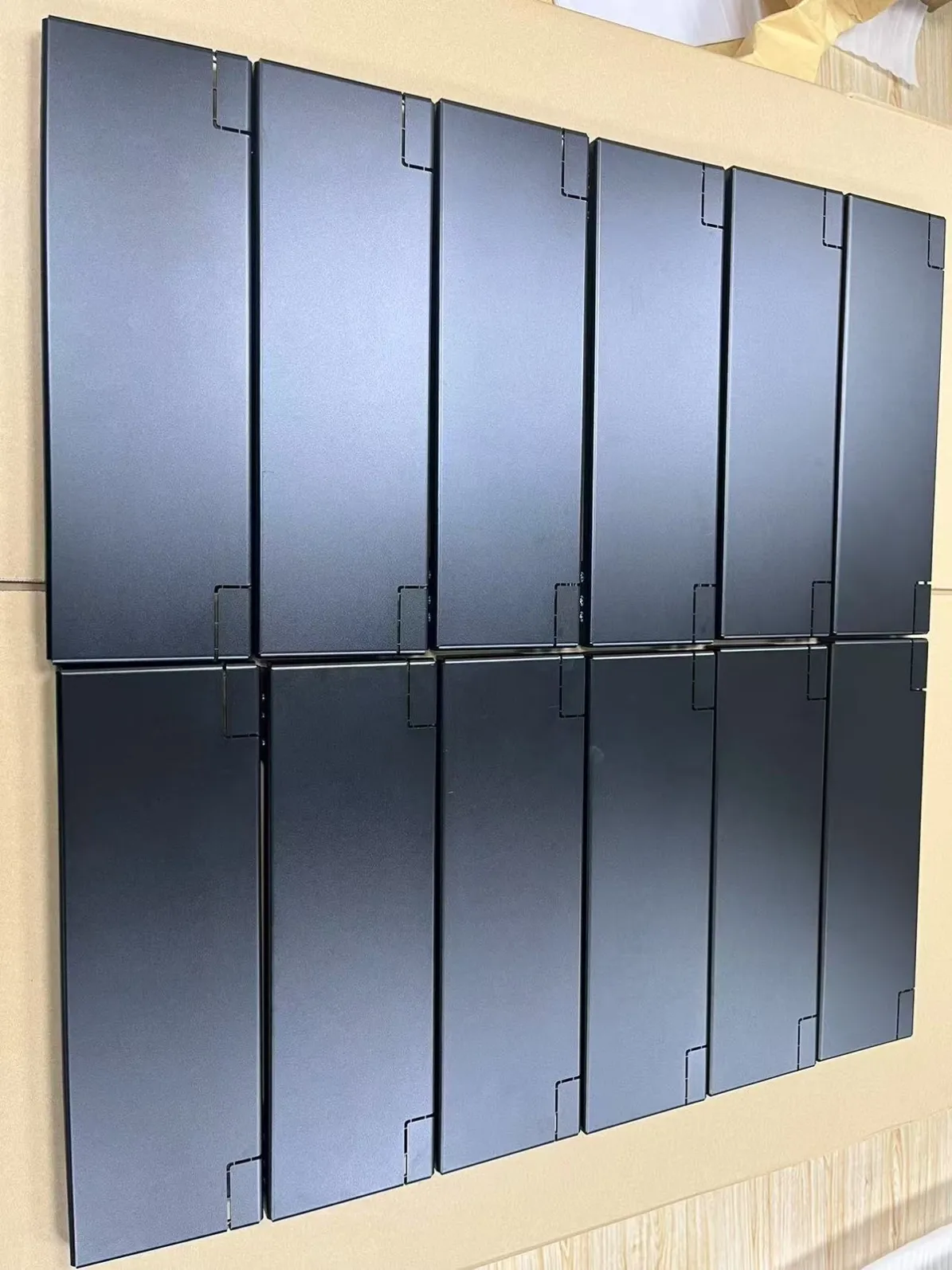
- The part must hang or sit on a conductive rack — hooks, wires or dedicated fixtures through the line.
- The contact point is masked by the hook itself and stays bare (or thin) after coating.
- The part must hang stably enough not to swing, touch its neighbors or pool powder in pockets — orientation is part of the racking decision, not an accident.
Small parts are often wired or hooked through a hole. Flat panels hang from a hole or an edge tab. Heavy parts need dedicated racks that carry the weight without bending the hook — and without the part rotating in the oven.
Where the mark lands
A hook mark is typically a few millimeters across. Good racking puts it where nobody will ever see or care:
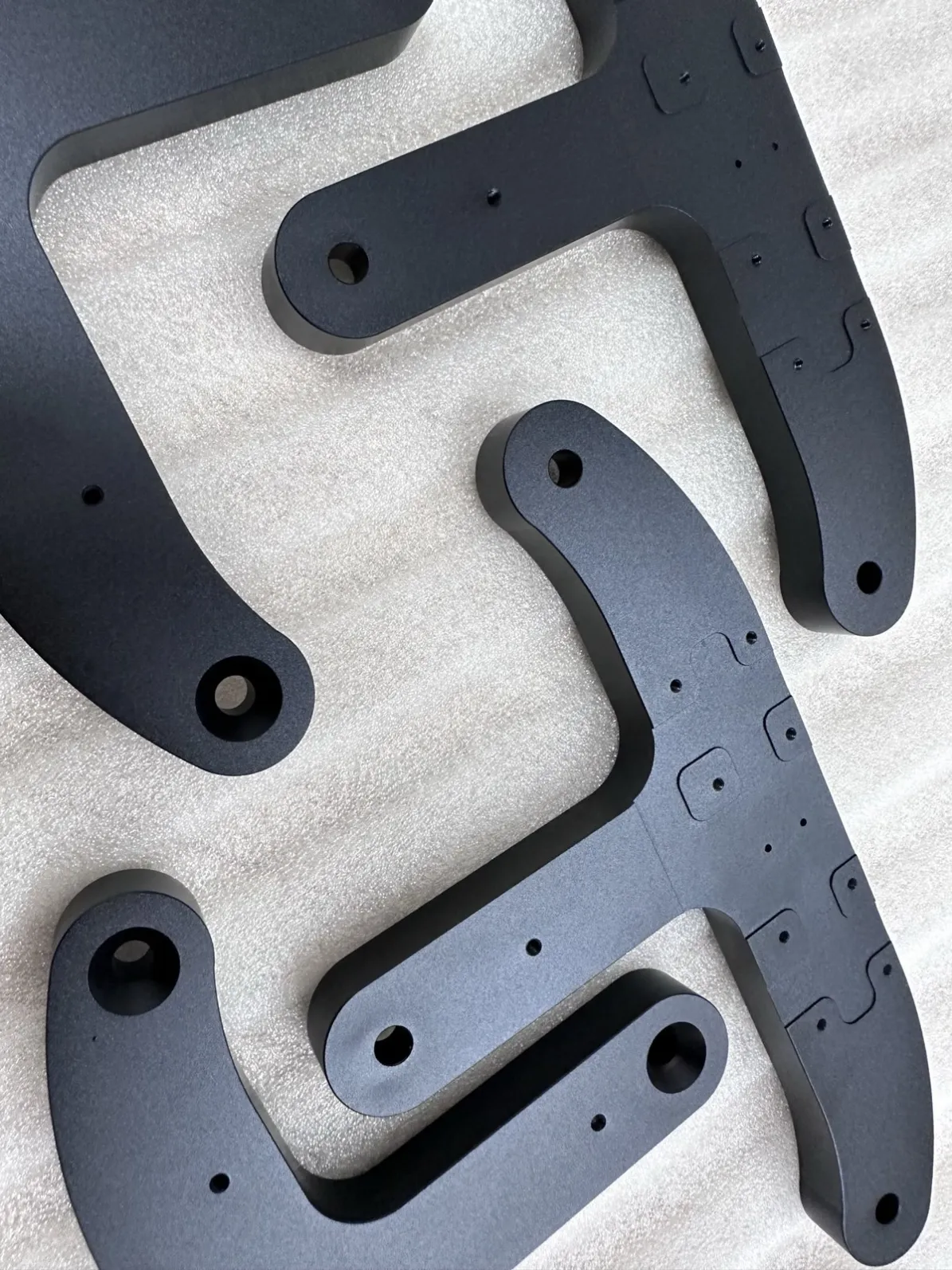
- Through a hole. A bolt hole that will hold a fastener anyway is the ideal hook point — the mark hides under the bolt head or washer.
- On an inside or back face. Covers and housings almost always have a face that never shows in service.
- On an edge or tab. A non-cosmetic edge, or a sacrificial tab designed in for handling.
- In a masked area. If a face is already masked for grounding or fit, the hook can share that real estate.
Bad racking is simply racking nobody thought about: the hook goes wherever the operator finds convenient, and on a symmetrical part that can be the show face. The fix costs nothing — it is a note on the drawing or the order: "rack marks acceptable on inside faces and in holes only," or a marked-up view showing the no-mark zone. Our finishes-on-drawings article covers how to write coating notes like this one.
Design choices that make racking easy
- Give the part a hole it can hang from. A Ø4–5 mm hole in a non-critical spot — even one that exists only for processing — makes small parts dramatically easier to coat well. On parts we make regularly, this is one of the most useful small design additions there is.
- Avoid deep closed pockets. Pockets trap powder, complicate grounding and cure unevenly. Vents and drain paths help more than any booth setting.
- Think about the oven, not just the booth. A part that hangs beautifully for spraying can still swing and touch a neighbor in the oven, or sag if it is thin and large. Symmetry and a sensible hang point matter twice.
- Batch consistency. For repeat orders, parts are racked on dedicated fixtures the same way every time — same hook points, same orientation — so the marks land in the same acceptable places batch after batch.
Touch-up and alternatives
A hook mark can be touched up with matching liquid paint, which is standard practice for a mark in a semi-visible spot — it restores appearance and basic protection, though the touch-up is paint, not cured powder. Marks on grounding faces are often left deliberately: the bare spot is what makes the ground connection, and coating it would defeat the purpose. If a part truly cannot accept any bare spot — a sealed outdoor enclosure face, for example — tell us at quote stage: options include racking from inside faces, coating in two orientations with the second pass covering the first mark, or a different finish for that face. Each has a cost, and knowing early keeps it small. Our powder coating guide covers the process and finish choices in full.
FAQ
Are hook marks a quality defect? No — they are inherent to the process; a part cannot be powder coated without being held and grounded. What is controllable is their size and location, which is why they belong in the drawing notes.
How big is a hook mark? Usually a few millimeters — the contact area of a wire hook. Dedicated racking with small contact points keeps them at the small end of that range.
Can the mark be inside a threaded hole? Hooks through threaded holes are avoided — the threads need masking anyway and a hook damages them. An unthreaded clearance hole is the better hang point.
Our enclosure cannot have bare spots on the outside. What do we do? Tell us at quote stage. Racking from inside faces solves it for most housings; where it cannot, a two-pass approach or touch-up plan is agreed before coating, not improvised after.
Do you decide racking or do we? We rack every part we coat — but the acceptable-mark locations are your call. Give us the no-mark faces and we rack to respect them; say nothing and we use our judgment, favoring hidden faces and holes.